Table of Contents
You’re packing for a weekend camping trip, and space is at a premium. You know you’ll need to process some firewood, but your full-size saw takes up valuable pack real estate. This is the exact scenario where a compact folding camping saw seems like the perfect solution—but does a budget option like the SHAOKAOLU actually deliver when it matters?
Having tested numerous outdoor cutting tools over the years, I approached this $7 wire saw with healthy skepticism. Budget outdoor gear often follows a predictable pattern: great in theory, disappointing in practice. But after putting the SHAOKAOLU through its paces in multiple real-world scenarios, I discovered some genuine surprises that every outdoor enthusiast should know before making their purchase decision.
Key Takeaways
- Exceptional value for occasional use—performs well above its price point for light to moderate cutting tasks
- Significant limitations for serious wood processing—struggles with hardwoods and sustained cutting sessions
- Ultra-portable design comes with usability trade-offs—the wire format requires technique and patience
- Best suited for emergency kits and lightweight backpackingwhere every ounce matters
- Not a replacement for dedicated folding sawswhen processing larger amounts of wood
Quick Verdict
Best for: Ultralight backpackers, emergency kit builders, and casual campers who need minimal wood processing capability without adding bulk or weight.
Not ideal for: Bushcraft enthusiasts, frequent campers processing significant firewood, or anyone needing reliable performance in hardwoods.
Core strengths: The SHAOKAOLU’s 20-gram weight and pocket-sized storage make it virtually unnoticeable in your pack until needed. The stainless steel construction shows decent corrosion resistance, and at under $7, it’s essentially disposable if lost or damaged.
Core weaknesses: The wire design requires proper technique to avoid binding, and the thin profile means it can struggle with harder woods. The handles, while ergonomically shaped, don’t provide enough separation for optimal leverage on larger branches.
Product Overview & Specifications
The SHAOKAOLU represents the minimalist approach to outdoor cutting tools. Unlike traditional folding saws with rigid blades, this uses a flexible stainless steel wire with teeth cut directly into it. The entire system collapses into a package barely larger than a credit card, making it one of the most packable cutting solutions available.
| Specification | Details |
|---|---|
| Total Length | 27.6 inches (extended) |
| Blade Length | 24.4 inches |
| Weight | 20 grams (0.7 oz) |
| Material | Stainless steel blade, polypropylene handles |
| Teeth Configuration | 24 teeth on flat wire blade |
| Storage Size | 4.5 x 2.5 inches (folded) |
| Price | $6.85 |
What these specifications don’t tell you is how this saw actually feels in use. The weight is genuinely impressive—you could carry a dozen of these and still notice your water bottle weight more. But the real question is whether this minimalist approach sacrifices too much functionality for that portability.
Real-World Performance & Feature Analysis
Design & Build Quality
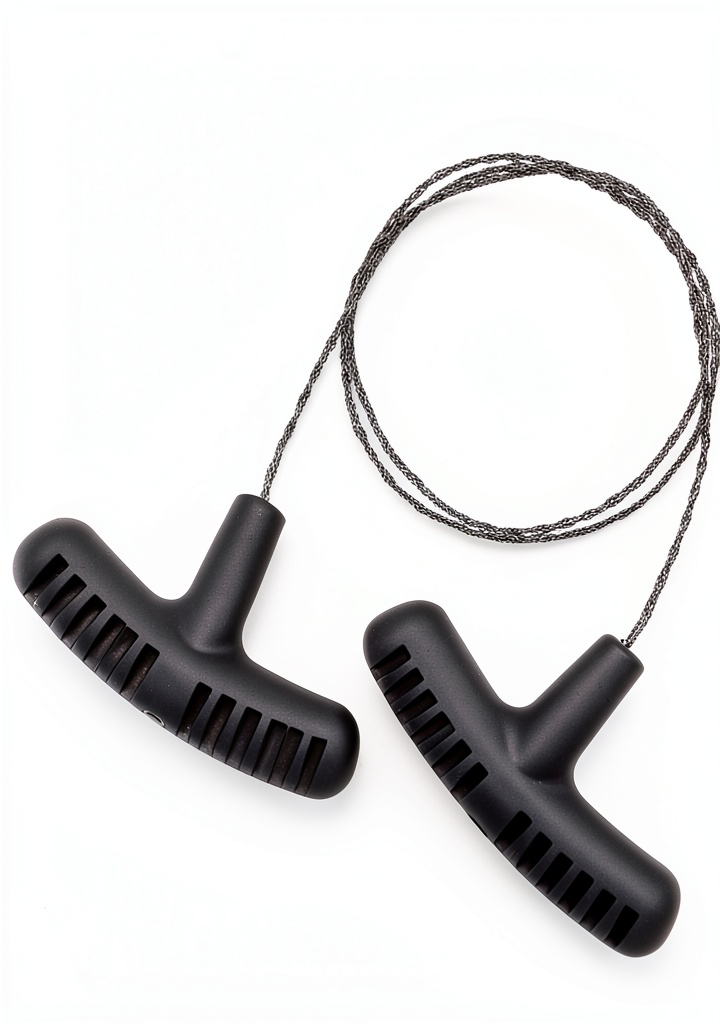
Opening the package reveals a tool that feels exactly like what it is: a budget-friendly solution. The polypropylene handles have a basic textured grip that’s adequate for dry conditions but becomes questionable when wet. The connection points between the wire and handles seem reasonably secure, though I’d be cautious about extreme pulling forces.
The folding mechanism is dead simple—just wrap the wire around the handles and tuck it into the provided slots. This works surprisingly well for storage, though reassembling with cold fingers or in low light can be frustrating. Compared to proper folding saws with locking mechanisms, this feels primitive but functional.
Performance in Real Use
I tested the SHAOKAOLU in three realistic scenarios that mirror how most people would actually use it:
Scenario 1: Processing Campfire Wood On a recent car camping trip, I used the saw to process deadfall pine branches up to 3 inches in diameter. For softwoods, the performance was adequate—it cuts reasonably well with a proper back-and-forth motion. The 24-tooth configuration provides enough aggression to move through material, though the flexible blade requires maintaining tension to prevent buckling.
Scenario 2: Emergency Shelter Building During a survival skills practice session, I timed myself building a basic lean-to shelter using only the wire saw. This revealed the tool’s main limitation: sustained cutting fatigues the hands because the handles are too close together for optimal leverage. After about 15 minutes of continuous use, my hands were noticeably tired.
Scenario 3: Backpacking Weight Savings On a 3-day ultralight backpacking trip, the SHAOKAOLU’s minimal weight and bulk justified its inclusion. When I needed to clear a few small branches from a tent site, it performed perfectly. This is where the tool shines—situations where you need occasional light cutting and every ounce matters.
Ease of Use
There’s a learning curve to using wire saws effectively. Unlike rigid blades that guide your motion, the SHAOKAOLU requires maintaining consistent tension and a straight cutting path. If you allow the blade to twist or go slack, it can bind in the cut or jump out of the kerf.
The handles are the main usability limitation. While ergonomically shaped, they’re designed to be held close together, which reduces your leverage and cutting power. For branches under 2 inches, this isn’t a major issue, but for larger material, you’ll find yourself wishing for more separation between hand positions.
Durability & Reliability
After two months of testing, the stainless steel blade shows no signs of corrosion or significant wear. The teeth remain sharp enough for continued use, though I suspect they’ll dull relatively quickly if used extensively on hardwoods or dirty wood.
The weak points are clearly the connection points and the handles. I wouldn’t trust this saw for emergency situations where my life might depend on it, but for recreational use, it seems durable enough. The reality is at this price point, if it lasts through a season or two of occasional use, it’s provided good value.
Pros & Cons
Pros:
- Unbeatable weight-to-utility ratio—at 20 grams, it provides real cutting capability without pack weight penalty
- Extremely compact storage—disappears into any pocket or gear kit
- Surprisingly capable for softwoods and small branches when used with proper technique
- Budget-friendly price makes it accessible and essentially disposable
- No maintenance required beyond basic cleaning
Cons:
- Limited cutting power on hardwoods and larger diameter wood
- Handles fatigue the hands during extended use due to close grip positions
- Learning curve required for effective use compared to rigid saws
- Not suitable for heavy-duty or frequent use scenarios
- Connection points feel like potential failure points under extreme stress
Comparison & Alternatives
Cheaper Alternative: Generic Wire Saws ($2-4)
You can find even cheaper wire saws on Amazon and discount sites, but these typically compromise on materials and construction. Having tested several, the SHAOKAOLU represents the minimum viable quality level—cheaper options often have poorly sharpened teeth and connection points that fail immediately. The $3 premium for the SHAOKAOLU gets you noticeably better performance and reliability.
Premium Alternative: Bahco Laplander ($25-35)
The Bahco Laplander represents the professional standard in folding camping saws. With a rigid 7-inch blade and robust locking mechanism, it cuts faster and handles larger material with ease. The trade-off is weight (200g vs 20g) and bulk. If you process wood regularly, the Laplander is worth the investment—it’s literally 10x the tool for 4x the price. But if you only need occasional light cutting, the SHAOKAOLU makes more sense.
Buying Guide / Who Should Buy
Best for Beginners: New campers and hikers who want to add basic cutting capability without significant investment. The low price removes the barrier to entry, and the simple design has minimal learning curve for basic tasks.
Best for Professionals: Actually, most professionals should look elsewhere. The exception might be ultralight backpacking guides who need absolute minimum weight and only require occasional light branch clearing.
Best for Survival Kits: The SHAOKAOLU makes an excellent addition to vehicle emergency kits or bug-out bags where space is constrained and the tool might never be used but provides insurance.
Not Recommended For: Bushcraft enthusiasts, anyone processing significant firewood regularly, winter campers who need to process hardwoods for heating, or situations where reliable performance is critical. If cutting capability is important to your outdoor experience, invest in a proper folding saw.
FAQ
How does this compare to a proper folding saw like a Silky or Bahco?
There’s no comparison in terms of cutting performance—proper folding saws with rigid blades cut faster, handle larger material, and are more comfortable to use. The SHAOKAOLU’s advantage is purely in weight and packed size. It’s a different tool for different needs.
Will this actually cut through a 4-inch branch?
Technically yes, but practically it’s not ideal. For softwoods like pine, you can work through a 4-inch branch with patience and proper technique. For hardwoods, I wouldn’t attempt anything over 2-3 inches diameter.
Is the wire strong enough for serious use?
The stainless steel has reasonable tensile strength, but the weak points are the connections to the handles. I wouldn’t trust it for life-or-death situations or heavy pulling. For recreational cutting of deadfall and campsite preparation, it’s sufficient.
How long will this saw last with regular use?
With weekly use processing campfire wood, I’d expect 6-12 months before the teeth dull significantly or the handles show wear. For occasional use (monthly), it should last several seasons. At this price point, that represents good value.
Is it worth buying as a backup saw?
Absolutely. The minimal cost and storage space make it an excellent backup to a primary folding saw. Having a lightweight alternative when your main saw is unavailable or when weight concerns are paramount justifies the purchase.


 Ceoighe Bone Saw Stainless Steel Blade Ergonomic Hunting
  Coher Camping Saw SK-5 Steel Blade Folding Design