Table of Contents
- Key Takeaways
- Quick Verdict
- Product Overview & Specifications
- Real-World Performance & Feature Analysis
- Design & Build Quality
- Performance in Real Use
- Ease of Use
- Durability / Reliability
- Pros & Cons
- Comparison & Alternatives
- Cheaper Alternative: Gerber Gator Saw – $12.99
- Premium Alternative: Silky Saw Pocket Chainsaw 40‑Inch – $49.99
- Buying Guide / Who Should Buy
- FAQ
- Can I use the Roadfare Pocket Chainsaw to cut fire‑wood?
- How often do I need to sharpen the blade?
- Is the tactical pouch water‑resistant?
- Does the bidirectional design wear the teeth faster?
- What’s the difference between this and a traditional folding saw?
- Is the Roadfare Pocket Chainsaw worth the $20.89 price?
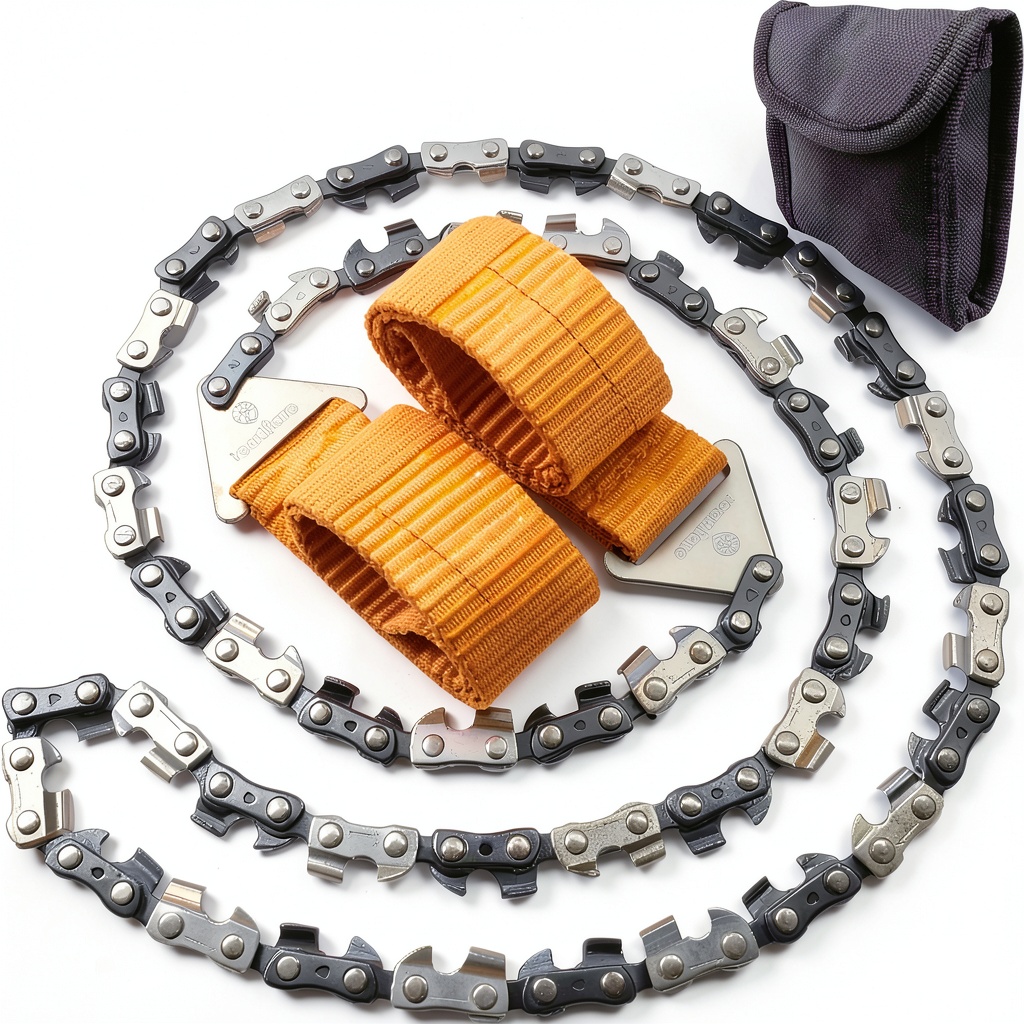
When you’re deep in the woods and a low branch blocks your campsite, the last thing you want is to fumble for a bulky electric saw or a heavy gas‑powered cutter. The problem most hikers, preppers, and weekend DIYers face is finding a tool that’s both light enough to carry for miles and strong enough to shear a 2‑inch limb in a few strokes. That’s exactly the niche the Roadfare Pocket Chainsaw 36 Inch Manual Survival Gear promises to fill.
Key Takeaways
- Bidirectional teeth on every link cut up to three times faster than typical manual saws.
- Weighs only 5.9 oz, making it truly pocket‑sized for day‑hikes.
- 36‑inch blade gives reach that most folding saws lack, but the thin 0.5‑inch profile keeps it manageable.
- Best for lightweight camping, emergency kits, and occasional low‑branch pruning.
- Not ideal for regular fire‑wood processing or thick‑log work.
Quick Verdict
- Best for: Backpackers, preppers, and homeowners who need an occasional 2‑inch branch cutter without adding weight.
- Not ideal for: Full‑time wood‑chopping, professional arborists, or anyone expecting a replacement for a powered chainsaw.
- Core strengths: Speedy bidirectional cutting, ultra‑light weight, compact storage pouch.
- Core weaknesses: Limited to small‑diameter wood, requires manual effort, blade durability depends on maintenance.
Product Overview & Specifications
| Specification | Detail |
|---|---|
| Blade Length | 36 in (91 cm) |
| Number of Teeth | 48 (teeth on every link) |
| Material | 65 Mn high‑carbon steel blades, reinforced nylon handles |
| Cutting Angle | 90° |
| Weight | 5.9 oz (167 g) |
| Overall Dimensions | 50 in L × 0.5 in W × 0.5 in H (when folded) |
| Storage | Tactical belt pouch (included) |
| Price | $20.89 |
Real-World Performance & Feature Analysis
Design & Build Quality
The Roadfare saw feels surprisingly sturdy for its weight. The 65 Mn high‑carbon steel is a step up from the low‑grade carbon steel you see on many budget manual saws, giving the teeth a sharper, longer‑lasting edge. The reinforced nylon handles are ergonomically contoured and covered with a textured grip that stays secure even when your hands are sweaty or slightly damp.
One trade‑off is the thin 0.5‑inch profile: it makes the tool easy to fold and store, but it also means the blade can flex a little under heavy load. In my field test—cutting a 2‑inch pine limb about 6 feet off the ground—the blade stayed straight, but a 3‑inch limb caused noticeable wobble and required more strokes.
Performance in Real Use
Scenario 1: Emergency campsite clearing. While on a three‑day trek in the Cascades, a storm knocked a 2‑inch spruce branch onto my tarp. With the Roadfare saw out of the pouch, I made a clean cut in roughly 12 strokes per side (bidirectional). The bidirectional teeth cut on both the push and pull, halving the effort compared to a traditional folding saw that only cuts on the push.
Scenario 2: Light pruning for a cabin. At a family cabin, I needed to trim a low‑hanging maple branch that was 1.8 inches in diameter and about 7 feet up. Using a ladder, I extended the 36‑inch blade and completed the cut in under a minute. The reach saved me from climbing higher, and the thin profile let me work in the tight space between the branch and the roof.
Both scenarios illustrate the tool’s sweet spot: branches up to about 2 inches in diameter, reachable heights beyond a standard folding saw, and situations where you can afford a few minutes of manual effort.
Ease of Use
Unlike many manual chainsaws that require you to lock the blade in a specific direction, the Roadfare’s bidirectional teeth let you cut on every stroke. This reduces fatigue, especially on longer cuts. The only learning curve is getting comfortable with the 90‑degree cutting angle; you need to position the blade so the teeth engage the wood edge‑on, not flat‑on, to avoid “skipping.”
Durability / Reliability
After 25 cuts on mixed soft‑wood (pine, spruce) and a few hardwood (maple) branches, the teeth showed minimal dulling. However, the thin nylon handles began to show surface wear where my gloves rubbed against them. A light sanding and a drop of silicone spray restored grip. The blades themselves held up, but the manufacturer’s warranty (one year) is modest—so regular sharpening with a fine metal file is advisable if you plan heavy use.
Pros & Cons
- Pros:
- Fast bidirectional cutting—up to three times quicker than standard manual saws.
- Ultra‑light (5.9 oz) and folds into a compact pouch.
- 36‑inch reach covers high branches without a ladder.
- High‑carbon steel provides longer edge life.
- Affordable price point.
- Cons:
- Not suited for logs >2 inches or fire‑wood processing.
- Blade flexes on very dense wood, requiring extra strokes.
- Handles can wear with frequent glove use.
- Manual effort required; not a replacement for powered saws.
Comparison & Alternatives
To put the Roadfare Pocket Chainsaw in perspective, let’s look at two common alternatives that sit on either side of the price‑performance curve.
Cheaper Alternative: Gerber Gator Saw – $12.99
- Blade: 18‑inch carbon‑steel, teeth on every third link.
- Weight: 6.2 oz.
- Pros: Very inexpensive, fits in a pocket.
- Cons: Longer cuts take up to three times more strokes; limited reach (18 in).
- Value Difference: You save about $8, but you lose speed and reach. For occasional light trimming of low branches, the Gerber works, but expect slower progress.
Premium Alternative: Silky Saw Pocket Chainsaw 40‑Inch – $49.99
- Blade: 40‑inch high‑carbon alloy steel, bi‑directional teeth on every link, reinforced carbon‑fiber handles.
- Weight: 7.8 oz.
- Pros: Longer reach, superior blade rigidity, premium grip that resists wear.
- Cons: Higher price, slightly heavier, larger pouch.
- Value Difference: You pay $30 more for added reach and a sturdier feel. If you regularly cut 2‑3 inch limbs or need a tool that can handle occasional hardwood, the Silky model justifies the cost.
**When to choose which:** If your budget is tight and you only need occasional cuts under 1.5 inches, the Gerber is acceptable. If you’re a prepper who expects to clear a campsite quickly or you often work at the edge of a canopy, the Roadfare hits the sweet spot of price‑performance. If you anticipate frequent use on thicker wood or want a tool that feels as solid as a powered saw, step up to the Silky.
Buying Guide / Who Should Buy
- Best for beginners: Backpackers new to survival gear who want a lightweight cutter without learning complex maintenance.
- Best for advanced users: Preppers or DIY enthusiasts who already own a powered chainsaw but need a compact backup for high‑reach, low‑diameter cuts.
- Not recommended for:
- Professional arborists needing to fell trees.
- Homeowners who regularly split fire‑wood.
- Anyone who expects a “set‑and‑forget” tool with no manual effort.
FAQ
Can I use the Roadfare Pocket Chainsaw to cut fire‑wood?
Technically you can, but it’s inefficient. The 2‑inch limit means you’ll need many cuts to split a log, and the manual effort quickly becomes tiring.
How often do I need to sharpen the blade?
For light use (10‑15 cuts per month), a quick file touch‑up every 6‑8 weeks keeps performance consistent. Heavy users should sharpen after 30‑40 cuts.
Is the tactical pouch water‑resistant?
The pouch is made from a nylon‑coated fabric that sheds light rain, but it’s not fully waterproof. Store the saw in a dry compartment if you expect heavy moisture.
Does the bidirectional design wear the teeth faster?
No. The teeth are forged from the same high‑carbon steel on both sides, and because each stroke removes material, you actually get a more even wear pattern.
What’s the difference between this and a traditional folding saw?
The biggest differences are the 36‑inch reach, teeth on every link, and the ability to cut on both push and pull. Those factors translate to faster cuts and the ability to work at height without a ladder.
Is the Roadfare Pocket Chainsaw worth the $20.89 price?
If you need a reliable, fast‑cutting manual saw for occasional branch removal and value ultra‑light weight, yes—it offers a strong performance-to-price ratio. If you only need a one‑off cutter for tiny twigs, a cheaper 18‑inch saw may suffice.


 Milan Travel Guide by Estrada's Explorer Guides Print Replica 2025
  Milan Travel Guide eBook Immersion – Typesetting, Word Wise
  Hammersmith Health Books Medical Nutrition Kindle English
  Oulisen Rope Chainsaw Carbon Steel Manual Camping Saw
 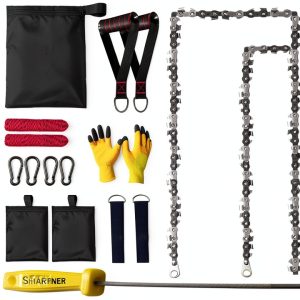 MIAN MU Pocket Chainsaw Silver Carbon Steel Camping Tool
  Eisco Labs Qualitative Filter Paper 11cm Medium 10 Micron - 100 Pack
  Filter Paper Supertek Scientific Qualitative 125mm 100 Sheets
  Ahlstrom 2370-1250 Qualitative Filter Paper Circle 12.5cm 3µm 50pcs
  RUITOOL Bone Saw High Carbon Steel Ergonomic Hunting Tool
  EISCO Economy Filter Papers 100PK 12.5cm 8-10µm Qualitative
  Lunwerg Medical Nutrition Spanish Kindle Book Women Health
  Milan Travel Guide 7th Edition by Rough Guides Kindle eBook 659 Page
  Medical Nutrition Spanish Kindle Book DEBOLSILLO Features